Chimney repointing in Norwich costs £150-800+ per stack depending on scope, using lime mortar suited to period brickwork. We also renew flaunching, fit cowls and cap disused stacks. Eroded pointing is
Chimney repointing in Norwich costs £150-800+ per stack depending on scope, using lime mortar suited to period brickwork. We also renew flaunching, fit cowls and cap disused stacks. Eroded pointing is a leading cause of chimney-breast damp — fixing it at source is cheaper than treating the symptom. Call 0160 339 6191.
✓NFRC Registered
✓Fully Insured £2m
✓10-Year Guarantee
✓Free Quotes
✓No Hidden Costs
Chimney Repointing · Norwich
Chimney Repointing in Norwich
Chimney repointing renews the mortar joints in a chimney stack that have eroded through decades of weather exposure. On Norwich's many Victorian, Edwardian and 1930s properties, the stack is the most exposed masonry on the whole building, taking the full force of wind-driven rain and freeze-thaw cycling. Repointing a stack costs £150-800 or more depending on its size, height and access. We repoint in lime mortar appropriate to period brickwork, not rigid cement, and address flaunching, cowls and capping in the same visit where needed.
Why Lime Mortar, Not Cement
Period Norwich chimney stacks were built with soft, breathable lime mortar, and repointing them in modern cement is a common and damaging mistake. Cement is harder than the surrounding brick, so it traps moisture, forces it into the bricks, and accelerates freeze-thaw spalling of the brick faces. Correct conservation practice — and the only durable approach on period stock — is to repoint in a matched lime mortar that flexes with the masonry and lets it breathe. This matters especially in Norwich's conservation areas and on the city's older, softer local brick.
Flaunching, Cowls and Capping
Repointing is often part of a wider chimney-top renewal. The flaunching — the mortar bed that holds the pots and sheds water off the stack top — cracks and erodes with the same freeze-thaw exposure, and once it fails water pours straight into the stack. We renew flaunching in the same visit. On disused stacks — most Norwich period chimneys are no longer in use — we fit a ventilated cap or cowl that keeps rain out while letting the flue breathe, preventing the internal condensation that a sealed-off stack suffers. Cowls also stop nesting birds and downdraught.
Repointing of period masonry should use lime-based mortar rather than cement, which is too rigid, traps moisture and accelerates decay of softer historic brick.
— Historic England / Building Regs
Local Knowledge · Norwich
The Chimney-Damp Connection
Internal damp at chimney-breast level is one of the most misdiagnosed problems in Norwich period property. Damp-proofing firms routinely treat it as rising or penetrating damp needing injection or tanking, when the actual cause is eroded pointing or failed flaunching admitting water at the stack top. Water enters at roof level and travels down through the brickwork, appearing as damp on the chimney breast metres below. Repointing and re-flaunching the stack eliminates the water source. We have resolved many apparently intractable damp problems this way, treating the cause rather than the symptom.
Stack Exposure Across Norwich
Which stacks fail first depends on exposure. Norwich's prevailing wet weather comes from the south-west, so south-west-facing stack faces weather hardest and lose their pointing first. Tall stacks on three-storey Golden Triangle terraces, and stacks on exposed elevations in the outer suburbs, take more punishment than sheltered inner stacks. Gable-end and party-wall stacks shared between terraced houses are common in Norwich and need particular care, as water entering a shared stack affects both properties. We assess exposure and prioritise the faces that need attention.
Repointing vs Rebuilding a Stack
Repointing renews the joints on a structurally sound stack. Where a stack has been neglected for decades, leaning, or the brick faces have spalled away, repointing alone is not enough and the top courses or the whole stack need rebuilding. We assess honestly which your stack needs — often repointing and re-flaunching is sufficient and far cheaper than a rebuild, but where the stack is genuinely unsafe we say so. A leaning or badly spalled stack is a safety issue as well as a damp one, particularly on a party-wall stack over a neighbour's property.
How to Tell If Your Chimney Needs Repointing
A chimney stack broadcasts its condition if you know what to look for, ideally with binoculars from ground level. Missing or crumbling mortar between the bricks, visible gaps you could slot a coin into, and mortar debris collecting in the gutter below the stack all point to failed pointing. Cracked or missing flaunching at the top, leaning pots, and green or white staining down the brickwork are further signs. Inside, damp patches on the chimney breast — particularly in the loft or top-floor rooms — frequently trace back to a stack letting water in. If you spot any of these on your Norwich property, a proper inspection from safe access will confirm the extent.
Protecting a Repointed Chimney for the Long Term
Once a Norwich stack is correctly repointed in lime mortar and re-flaunched, a few measures keep it sound for decades. A ventilated cowl on a disused flue keeps rain out while letting the stack breathe. Ensuring the lead flashing where the stack meets the roof is sound stops water bypassing the pointing entirely. And a periodic look at the stack — the most exposed masonry on the house — catches any early erosion before it lets water in again. We leave every repointed stack weathertight and advise on these simple protective steps, so the work we do lasts the many years that correct lime repointing should.
Pricing · Norwich & Norfolk
Chimney Repointing Prices in Norwich
£150-400
Partial Repoint
Weather-facing courses
£400-800+
Full Stack Repoint
All faces, incl access
£150-350
Flaunching Renewal
Mortar bed at stack top
£80-250
Cowl / Cap
Disused stack, ventilated
Free survey and written quote — no call-out fee, no obligation
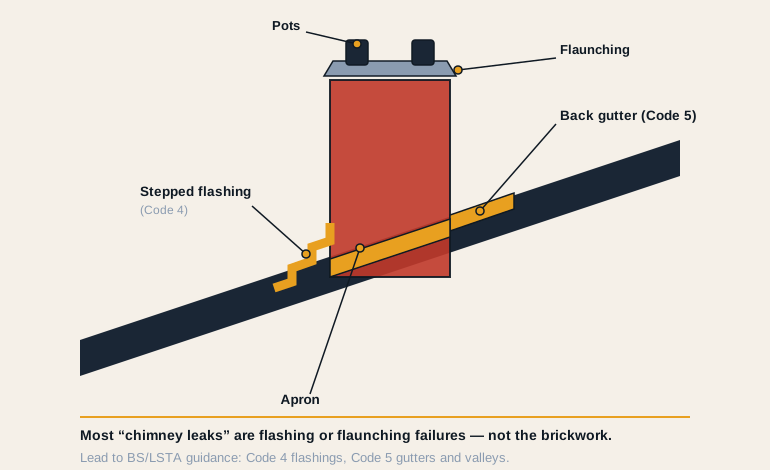
Most "chimney leaks" and valley leaks on Norwich period property are failed leadwork, not the surrounding roof. The question is whether your lead needs re-dressing or full renewal.
Water tracking down a chimney breast inside
Staining or damp at a valley or abutment
Lead visibly split, cracked or lifted
White or grey staining on masonry below lead (no patination oil)
Lead sheets that are too long and have buckled
When it is not the answer: If the lead is sound and only the pointing above it has failed, you need repointing, not new lead — we diagnose the actual failure rather than replacing serviceable lead. Read the full guide.
Traditional lead detailing at a chimney: apron, stepped flashing and back gutter.The process
From First Call to Sign-Off
1. Lead inspection
We identify the failing detail — flashing, valley, back gutter, bay or porch top — and the correct lead code for it.
2. Specification quote
You get a written quote naming the lead code (4–6) and the traditional welted or lapped jointing method.
3. Scheduling
We book the work, coordinating with any associated masonry or tiling.
4. Strip & re-dress
We strip the defective lead and re-dress it correctly with properly sized bays, welted joints, adequate upstands and patination oil.
5. Sign-off
We complete to a watertight finish and hand over the guarantee.
Timescales
Typical Timescales
Job
Typical duration
Chimney flashing re-lead
Half a day to a day
Valley or back-gutter re-line
1–2 days
Bay or porch lead top
1–2 days
Parapet gutter re-line
2–3 days
Leadwork runs year-round in most weather; only heavy rain during the actual dressing stops work.
Access
Getting Safely onto Norwich Roofs
Leadwork usually needs scaffold or a tower for safe standing time at the detail; chimney and parapet work is always scaffolded. Scaffold is specified for: chimney, parapet and valley work, and any lead detail needing sustained standing time - always itemised in your written quote, never a hidden extra, and we arrange it.
Norwich’s medieval core and Golden Triangle terraces mean tight street frontages, rear-access-only roofs and permit-controlled pavement space for scaffold. Pavement scaffold and skip permits go through Norwich City Council; allow a few working days on streets like Elm Hill, Magdalen Street, Gentleman’s Walk where space is tight.
Leadwork carries a 10-year written workmanship guarantee; correctly sized and welted lead to code lasts decades longer than the failed work it replaces.
Covered: workmanship for 10 years, in writing, transferable if you sell.
On top: manufacturer warranties on materials (terms vary by product).
Not covered: storm or impact damage - that is an insurance matter, and we will document it for your claim.
If a fault appears in covered work, we come back and put it right. No quibbling, no re-charge.
Leadwork should follow Lead Sheet Association detailing — correct lead codes, sized bays and welted joints — to allow thermal movement without splitting.
— Lead Sheet Association / BS 6915
Good to know
Disruption, Mess & Weather
Scaffold or tower at one part of the roof, minimal noise, and no need to be home for external work. We protect masonry below with patination oil to prevent staining. You do not need to stay home for external work - we just need power and access agreed in advance.
Leadwork runs year-round; we keep the detail weathertight between sessions and avoid dressing lead in heavy rain. Norfolk’s exposure to north-easterly gales off the North Sea, and Wensum valley humidity, drive wind-lifted tiles and slower autumn drying.
Reviews · Norwich
What Norwich Customers Say
★★★★★
"Repointed our Victorian stack in lime mortar and renewed the flaunching. The bedroom damp we'd had for years — turned out to be the chimney all along — has completely gone."
Raymond F.Golden Triangle, NR2
★★★★★
"Another firm wanted to inject the walls for 'rising damp'. These lot said it was the chimney and repointed it. They were right — dry ever since. Honest and skilled."
Josephine M.Lakenham, NR1
★★★★★
"Capped two disused stacks with ventilated cowls and repointed the party-wall stack. Explained why cement would've been wrong on our old brick. Proper craftsmen."
Colin T.Heigham, NR2
FAQs · Norwich
Chimney Repointing Norwich — Common Questions
Repointing a stack costs £150-400 for weather-facing courses or £400-800+ for a full stack, depending on size, height and access. Flaunching renewal is £150-350 and a ventilated cowl or cap £80-250. Free survey and quote.
Period Norwich stacks were built in soft, breathable lime mortar. Repointing in rigid cement traps moisture and accelerates freeze-thaw spalling of the softer brick. Lime mortar flexes with the masonry and lets it breathe — the only durable approach.
Very often, yes. Internal chimney-breast damp is frequently misdiagnosed as rising damp when the real cause is eroded pointing or failed flaunching admitting water at the stack top, which travels down inside the brickwork. Repointing fixes it at source.
Flaunching is the mortar bed at the stack top that holds the pots and sheds water. It cracks and erodes under freeze-thaw exposure, and once failed water pours straight into the stack. We renew flaunching alongside repointing where needed.
Yes, with a ventilated cap or cowl — most Norwich period chimneys are disused. A ventilated cap keeps rain out while letting the flue breathe, preventing internal condensation. Never seal a stack solid, which traps moisture and causes damage.
Repointing suits a structurally sound stack with eroded joints. A leaning stack, or one with badly spalled brick faces, needs the top courses or the whole stack rebuilt. We assess honestly — repointing is often sufficient and far cheaper than a rebuild.
South-west-facing faces, into Norwich's prevailing wet weather, lose their pointing first. Tall stacks on three-storey terraces and exposed suburban elevations weather hardest. We prioritise the faces that need attention.
Yes — the survey and written quote are free, naming the mortar specification and the works needed. We inspect the stack from proper access, not guesswork from the ground. Call 0160 339 6191.