Why Norwich Chimneys Need Regular Attention
Norwich's freeze-thaw climate is hard on chimney mortar. Water penetrates microscopic cracks in the pointing, freezes and expands overnight, then thaws and contracts — progressively widening the cracks with each cycle. On Victorian and Edwardian Norwich properties, the original lime mortar has often been partially or wholly replaced with cement mortar in previous repairs — a serious problem, because cement is too rigid for the thermal movement of a brick chimney stack. Cement pointing traps moisture, causes the brickwork to spall, and needs replacing with a flexible lime-based mortar appropriate to the age of the property.
Repointing of period masonry chimneys should use lime-based mortar rather than cement, which is too rigid and traps moisture, per conservation best practice.
Source: Historic England guidance
Chimney Repointing — What's Involved
Repointing involves cutting out the failed mortar to a depth of 15-20mm and replacing it with appropriate new mortar. On Victorian and Edwardian Norwich properties, the correct mortar is a lime-based mix — typically a 1:2:9 cement:lime:sand or pure lime mortar on older properties. Hard cement mortar is inappropriate and will cause further damage. We rake out all failed mortar rather than spot-pointing individual joints — a partial repoint that leaves failed mortar behind requires revisiting within 3-5 years. Full chimney repointing on a standard Norwich stack takes half a day to a day depending on access requirements.
Lead Flashing at Chimney Bases
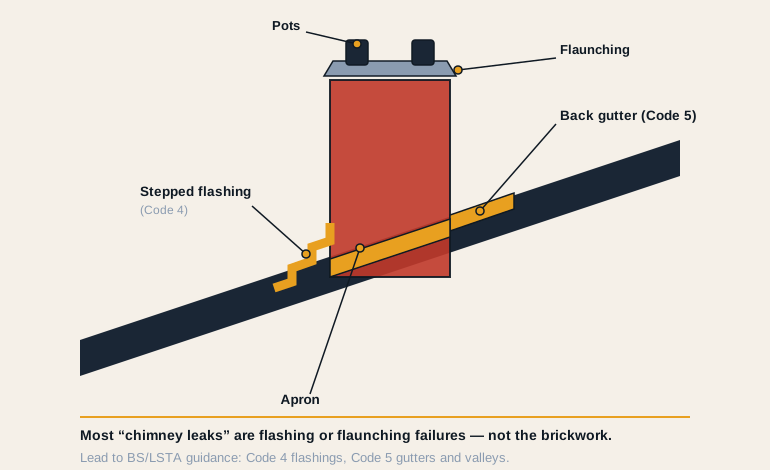
The flashing system at a chimney base comprises: an apron flashing at the front face, step flashings on both sides that step up with each brick course, cover flashings that lap over the step flashings and are fixed into the ragwork joints in the brickwork, and a back gutter or saddle flashing at the rear. Each element must be correctly lapped and have a minimum 75mm lap onto the tile surface. The most common failure is mortar erosion in the ragwork joints — the slots cut into the brickwork that retain the flashing edge. We cut fresh ragwork, point in new mortar, and apply patination oil to all new lead on completion.
Need a free survey or quote for your Norwich property?
Call 0160 339 6191 — Free QuoteChimney Pot and Flaunching Repairs
The flaunching is the mortar bed at the top of the chimney stack that holds the chimney pots in place and directs rainwater away from the stack interior. On Norwich period properties, original flaunching is often cracked or partially collapsed — allowing water to run down inside the stack. A crack in the flaunching that appears minor from ground level can be admitting significant water volumes during heavy rain. We repair or replace flaunching using a waterproof mortar appropriate to the exposure, and check pot condition at the same time — cracked or leaning pots are replaced as part of every flaunching job.
When Chimney Rebuilding is Needed
Partial or full chimney rebuilding is necessary when: the brickwork has deteriorated structurally and cannot be repointed (spalling brick, loose or hollow courses); the stack has moved or leaned significantly; or the chimney has been struck and the structure is compromised. Rebuilding a Norwich Victorian chimney to the original profile requires brick matching — a job that requires experience with period brickwork and, on conservation area properties, may require planning input. We assess rebuild requirements during the survey and provide a clear recommendation on whether repointing, partial rebuild, or full rebuild is the appropriate course.
Last reviewed: 2026-07-20 by Norwich Roofing Experts