What to Check and When
November is the most important month for Norwich roof inspections. After leaf fall but before the main winter rainfall season, inspect from ground level: look for missing or slipped tiles, check the ridge line for displaced caps, look for sagging sections or dark staining on the roof surface that suggests wet underlay. Check gutters are running clear and not overflowing at any point along the run. Look at downpipe connections and check for water marks on the house wall below any junction. This annual November check catches the majority of problems before winter weather makes them worse.
Industry guidance recommends roofs be professionally inspected at least once every five years, and more frequently on properties over 40 years old.
Source: NFRC maintenance guidance
After Storm Events
After any significant storm — the North Sea gales that track across Norfolk between October and March are the main risk — check the ridge line from ground level specifically. Ridge cap displacement is the most common storm damage on Norwich properties. Also check valley areas on period properties and look for debris accumulation that might block outlets. If you see multiple missing tiles or any ridge displacement, call a roofer rather than attempting roof access yourself — a pantile or slate roof is not safe to walk on without specialist equipment.
The Five-Year Survey
Every 4–5 years, arrange a proper roof survey with roof access. A ground-level check cannot assess nail fixing condition on period properties, cannot check underlay condition, and cannot see flashing and valley integrity properly. A professional survey with roof access costs £75–£150 and produces a written report. On Norwich's Victorian and Edwardian housing stock — now 110–140 years old — this is not optional maintenance; it is essential structural management.
Need a free survey or quote for your Norwich property?
Call 0160 339 6191 — Free QuoteGutters and Drainage
Norwich's tree canopy makes annual gutter clearing essential on most city properties. Blocked gutters overflow onto walls, rot fascia boards, and — on Victorian lime mortar properties — saturate the brickwork and cause internal damp. Clear in November after leaf fall. On properties with heavy canopy overhead, consider fitting leaf guards at the same time as any gutter replacement — the payback period against annual clearing costs is 3–4 years on most Norwich streets.
What Not to Do
Do not attempt to walk on a pantile, slate or concrete tile roof without crawling boards and proper access equipment — cracked tiles are expensive to source and match. Do not use expanding foam or silicone sealant as a first-line roof repair — these are temporary measures that trap moisture and make permanent repair harder. Do not leave a temporary make-safe in place for more than a few weeks — temporary materials are not designed for sustained weathering and a second failure typically causes more damage than the first.
How to Document Your Roof's History
Keeping a simple record of roof inspections, repairs and their dates has two practical benefits. First, it demonstrates to insurers that the roof was in a reasonable state of maintenance prior to any storm damage claim — undocumented maintenance is much harder to argue for in a disputed claim. Second, it tells the next roofer what has been done and when, avoiding repeat work or missed maintenance cycles. A folder with survey reports, photographs, invoices and dates of clearing is sufficient. We provide written reports and photographs on all surveys as a standard part of the service.
Loft Inspections as Part of Roof Maintenance
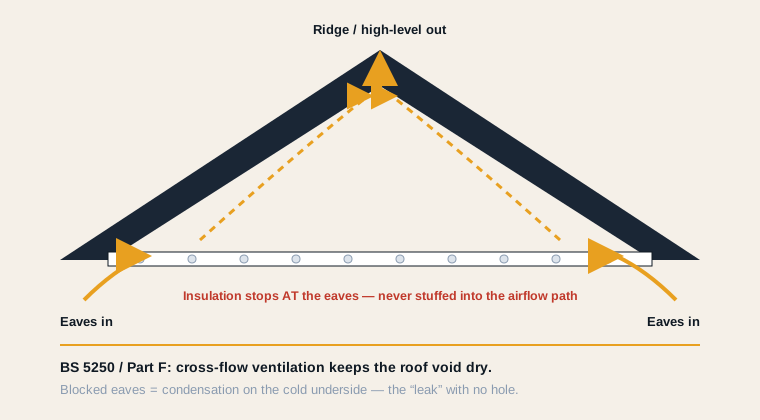
A loft inspection is one of the most informative roof maintenance checks available and does not require roof access. Look for: daylight visible through the roof structure (indicates missing tiles or failed underlay); damp patches or staining on the rafters or sarking boards (indicates ongoing water ingress); condensation on the underside of the underlay (indicates ventilation issues); and any structural movement in the rafters or ridge board. On Victorian and Edwardian properties with no underlay — common in Norwich's oldest housing — any moisture penetration will be visible directly on the rafters.
Seasonal Maintenance Calendar for Norwich Homeowners
March–April: check for frost damage to pointing and mortar after winter; clear spring blossom and sycamore seeds from gutters; inspect any temporary repairs made over winter. June–August: check for moss and lichen growth on north-facing pitches; inspect flat roof outlets and clear any debris accumulation; assess whether biocide treatment is warranted on heavily affected pitches. September–October: arrange professional survey if not done in the past 4 years; fit leaf guards if not already in place; check all downpipe connections before leaf fall. November: full gutter clear after leaf fall; ground-level roof inspection; arrange any urgent repairs before main winter rainfall.
Summary — What to Do Next
Roof maintenance in Norwich is primarily about two things: keeping drainage clear and catching structural deterioration before it causes water damage. Both are achievable with modest annual effort and modest professional input. The annual November gutter clear, the ground-level inspection in spring and autumn, and the professional survey every 4–5 years will, between them, prevent the vast majority of the repair bills that Norwich homeowners face. We carry out surveys, repairs and maintenance across all Norwich postcodes and the wider Norfolk area. Free surveys, no obligation, and written reports on all professional inspections.
Last reviewed: 2026-07-20 by Norwich Roofing Experts