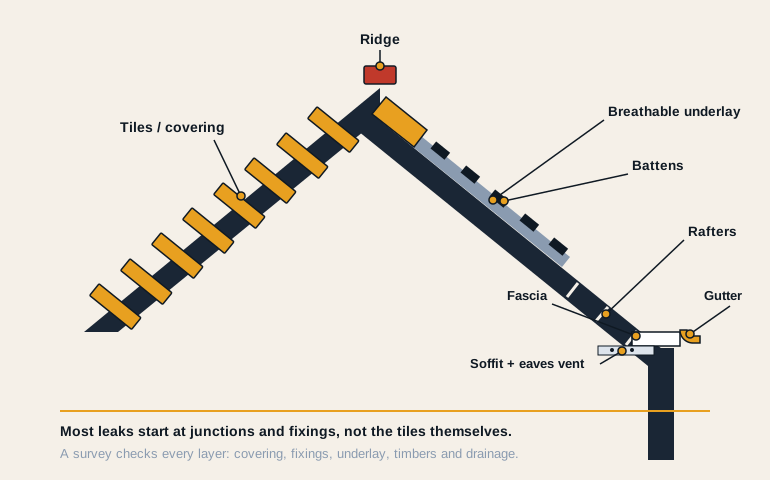
Ground Level — What to Check
Start from the front of the property with a good pair of binoculars. Work systematically from ridge to eaves on each visible roof plane. Ridge line: is it straight and continuous? Any displaced or missing ridge caps? Mortar crumbling visible along the ridge? Roof surface: are all tiles in their correct position? Any obvious slippage, particularly on the lower courses? On pantile, look for any tiles sitting proud of their neighbours — this indicates a loose fixing. On slate, check for any slates that have slipped to one side. Valleys and junctions: check the valley line where two roof planes meet — any debris accumulation or visible gaps in the lead or tile?
Roofs should be inspected at least twice a year and after severe weather events, according to standard property maintenance guidance.
Source: RICS home maintenance guidance
Chimney and Stack Inspection
Use binoculars to check the chimney stack on every inspection. Pointing condition: does the mortar between the brickwork courses look intact, or are there obvious gaps, crumbling or missing sections? Lead flashing: is the flashing visible at the base of the stack on all four sides? Any visible gaps, lifted edges or detachment from the brickwork? Chimney pot condition: is the pot sitting level? Any visible cracks? Does the mortar flaunching at the base of the pot look intact? Staining: any dark staining on the brickwork below the stack indicates water running down the masonry — a sign of failed pointing or flashing.
Gutters and Downpipes
After any significant rainfall, check gutters from ground level. Are any sections overflowing that shouldn't be? Any water marks on the wall below downpipe connections — indicating a joint failure? Check downpipes for any sections that have pulled away from the wall. In November after leaf fall, check that downpipes are running freely — hold a hose at the top and check flow exits at the bottom. Any delay in flow indicates a blockage. On cast iron guttering, look for any sections with a green oxidation stain beneath them on the wall — this indicates a hole or joint failure.
Need a free survey or quote for your Norwich property?
Call 0160 339 6191 — Free QuoteLoft Inspection
Twice a year — spring and autumn — take a torch into the loft space on a dry day and look for: any daylight visible through the roof structure (indicates a missing tile, failed underlay, or gap in the flashing); any damp patches or dark staining on rafters or sarking boards; any smell of damp wood; and any obvious structural movement in the rafters or ridge board. After a heavy rainfall event, wait 24 hours then check the loft — any new damp patches indicate active water ingress.
When to Call a Professional
Call a roofer if: you see any displaced or missing tiles from ground level; there is any daylight visible through the roof structure from the loft; there are damp patches on any internal ceiling or wall at high level; the ridge line appears to sag or deviate; any chimney mortar or flashing appears to have failed; or gutters are consistently overflowing despite being recently cleared. Arrange a professional survey every 4-5 years on any Norwich property over 30 years old, or after any significant storm event. The cost of a survey is trivial compared to the cost of water damage from a failed roof that went undetected.
Last reviewed: 2026-07-20 by Norwich Roofing Experts